Quick answer
Most San Francisco lenders allow CLTV up to 85-90%, and with a median home value around $1.4M, typical HELOC sizes run $250K-$800K. The biggest SF-specific variable is income: most lenders count RSU income only with a two-year vesting history and documented continued vesting. Credit above 760 and CLTV under 70% earn the best pricing, and direct lenders usually close in 3-4 weeks.
The 30-second version
San Francisco HELOC rates in 2026 typically range from 7.0% to 9.5% APR (prime, 7.00% since September 16, 2026, plus a 0%–2.5% margin). Well-qualified SF borrowers — 760+ credit, sub-65% CLTV — frequently land at 7.0%-7.75%. Higher-CLTV or credit-thinner borrowers land at 7.5%-8.75%. The SF-specific wrinkle: getting the lender to fully count RSU and equity comp income, which can add hundreds of thousands to your qualifying income and unlock a much larger line. Get a real rate quote in about 2 minutes.
Why San Francisco HELOC math is different
Two factors make SF a distinct HELOC market:
1. The RSU/equity-comp underwriting question. A senior engineer or PM at a large SF tech company frequently has W-2 base pay of $250K-$400K but total comp of $600K-$1.5M once RSUs vest. Whether a lender counts those RSUs — and how much of them — is often the single biggest variable in how much HELOC you qualify for. Standard guidance: a two-year vesting history with continued vesting documented is usable; single-year or brand-new grants generally aren't. An SF-experienced lender will structure the file properly; a generic online lender often just excludes RSUs by default, cutting qualifying income in half.
2. The 1000+ price-per-square-foot median means small properties, large HELOCs. A modest 1,500 sqft SF home is a $1.5M asset. That pushes almost every SF HELOC into the "large loan" tier, where appraisal requirements, income documentation, and underwriter assignment all change. Lenders comfortable with SF-scale files are a smaller subset of the national market — worth filtering for early.
Average San Francisco HELOC rates in 2026
Based on lender publications and direct origination data through June 2026:
| Borrower profile | Typical APR range |
|---|---|
| SF tech W-2, 780+ FICO, <60% CLTV | 6.99% - 7.5% |
| 760+ FICO, <70% CLTV | 7.25% - 7.85% |
| 720-759 FICO, 70-80% CLTV | 7.75% - 8.5% |
| 680-719 FICO, 80-85% CLTV | 8.5% - 9.5% |
| 640-679 FICO or 85%+ CLTV | 9.5%+ (limited) |
Top San Francisco neighborhoods for HELOCs
- Pacific Heights / Presidio Heights: Median $3.5M+. HELOCs $500K-$1.5M common. Highest-value SF submarket.
- Marina / Cow Hollow: Median $2.5M-$3M. HELOCs $400K-$1M common.
- Noe Valley: Median $2M-$2.5M. HELOCs $350K-$900K common; tech-family renovation is the classic use case.
- Mission / Bernal Heights: Median $1.6M-$2M. HELOCs $300K-$700K common.
- SoMa / South Beach (condos): Median $1.1M-$1.5M. HELOCs $150K-$400K common; HOA and warrantability requirements can complicate approvals.
- Sunset / Richmond: Median $1.5M-$1.8M. HELOCs $250K-$600K common; long-tenure ownership means substantial appreciated equity.
What to compare in any San Francisco HELOC quote
Two HELOCs with the same advertised rate can cost very different amounts. Whoever you talk to, line up every quote on the same points:
- Line size and CLTV cap. Many banks and credit unions stop at 80% combined loan-to-value; a higher cap can mean a much bigger line on the same home.
- How the rate is built. Ask for the index, the margin, any intro rate and when it ends, the rate cap, and the floor.
- All the fees. Origination, appraisal, title and recording, annual fees, and any early-closure fee.
- Draw and repayment terms. How long you can draw, whether draw payments are interest-only, and whether a balloon is due when the draw ends.
- Minimum draw. Some lines require you to take most of the money at closing, so you pay interest on it from day one.
- How your income is counted. Self-employed, 1099, commission, and rental income are where lenders differ most.
- Stock compensation. Ask exactly how RSU and bonus income will be counted; some lenders need a two-year vesting history, others exclude it.
- Maximum line size. Many lenders cap standard HELOCs at $500K–$750K; confirm the lender can write the size you need before you apply.
- Time to close. Ask for a realistic closing date in writing if your use is time-sensitive.
Where our program fits: credit scores down to 600 with compensating factors, debt-to-income up to 50%, up to 90% combined loan-to-value in certain cases, and self-employed income on bank statements, a P&L, or 1099s. We offer HELOCs and fixed-rate home equity loans, and as a licensed broker we also shop wholesale programs you can't apply for directly, so one application gets you several quotes.
How to get the best San Francisco HELOC rate in 2026
Three levers actually move your rate:
- Credit score above 760. The single biggest factor — 0.5-0.75% APR savings vs. a 720 score.
- CLTV below 70%. Premium pricing tier. Most SF owners with more than three years of tenure already qualify because of appreciation.
- Comparison shopping — several quotes on the same terms; a broker can get them with one application. Pricing spread of 0.25-0.5% APR is common; qualifying-income spread can be much larger if RSUs are involved.
Get a real San Francisco HELOC rate quote in 2 minutes
I'm licensed to originate HELOCs in California and 21 other states, and I regularly underwrite RSU-heavy SF files. Send a quick file and I'll come back with your actual rate — not a teaser.
FAQ
What is the average HELOC rate in San Francisco in 2026?
Average HELOC APR in SF for 2026 ranges from 7.0% to 9.5%, with well-qualified borrowers typically landing between 7.25% and 8.25%.
How do I get the best HELOC rate in San Francisco?
Get at least two or three quotes on the same day and compare the margin over prime, the CLTV cap, all fees, draw terms, and any minimum draw, not just the intro rate. Credit above 760 and CLTV under 70% earn the best pricing in San Francisco. A licensed broker can price several lenders at once, including wholesale programs you can't apply for directly, with one application. Our program considers credit scores down to 600.
Do lenders count my RSUs when qualifying me for an SF HELOC?
Most lenders will use RSU income if it has a two-year vesting history and continued vesting is documented. Newer or single-year RSU income typically isn't counted. Working with an SF-experienced lender materially improves how the file is structured.
How much HELOC can I get on my SF home?
Most SF lenders allow CLTV up to 85-90%. With SF's median home value around $1.4M — and $3M+ in Pacific Heights — typical HELOC sizes run $250K-$800K, with $600K-$1.5M common for high-equity coastal-neighborhood owners.
How long does an SF HELOC take to close?
National direct lenders typically close in 3-4 weeks. SF credit unions usually take 5-8 weeks. Time-sensitive uses generally favor a direct lender.
Talk to a licensed HELOC lender
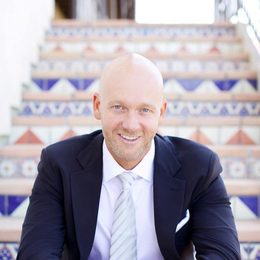
Get a rate estimate or ask a question — direct answer from Audi Garner, Branch Manager & Broker (NMLS #190235). No sales pitch. No hard credit pull.
Get a 60-second rate estimate
Soft pull only. See your rate estimate instantly.
Ask Audi a HELOC question
Direct answer from a licensed originator. Usually within 1 business day.
Keep reading
Audi Garner is a Branch Manager & Mortgage Broker (NMLS #190235) licensed in California and 21 other states through West Capital Lending (NMLS #1566096). Rate ranges in this article reflect typical pricing observed through June 2026 and are not a quote.